Tesla FSD v13: Is Full Self-Driving Finally Ready?
Tesla FSD v13: Is Full Self-Driving Finally Ready?
I still remember the night I spent 5 hours testing Tesla's Autopilot on the highway - it was like having a co-pilot, but one that needed constant supervision. That was a few years ago. Now, with the news of Tesla's Full Self-Driving (FSD) v13, I'm excited to see if this update will be the one that finally makes autonomous driving a reality. For years, drivers have been beta testers for a system that has promised more than it has delivered, at least in the eyes of many regulatory bodies and the public. But with v13 on the horizon, the question remains: Is this the version that finally bridges the gap between advanced driver assistance and genuine self-driving capability?
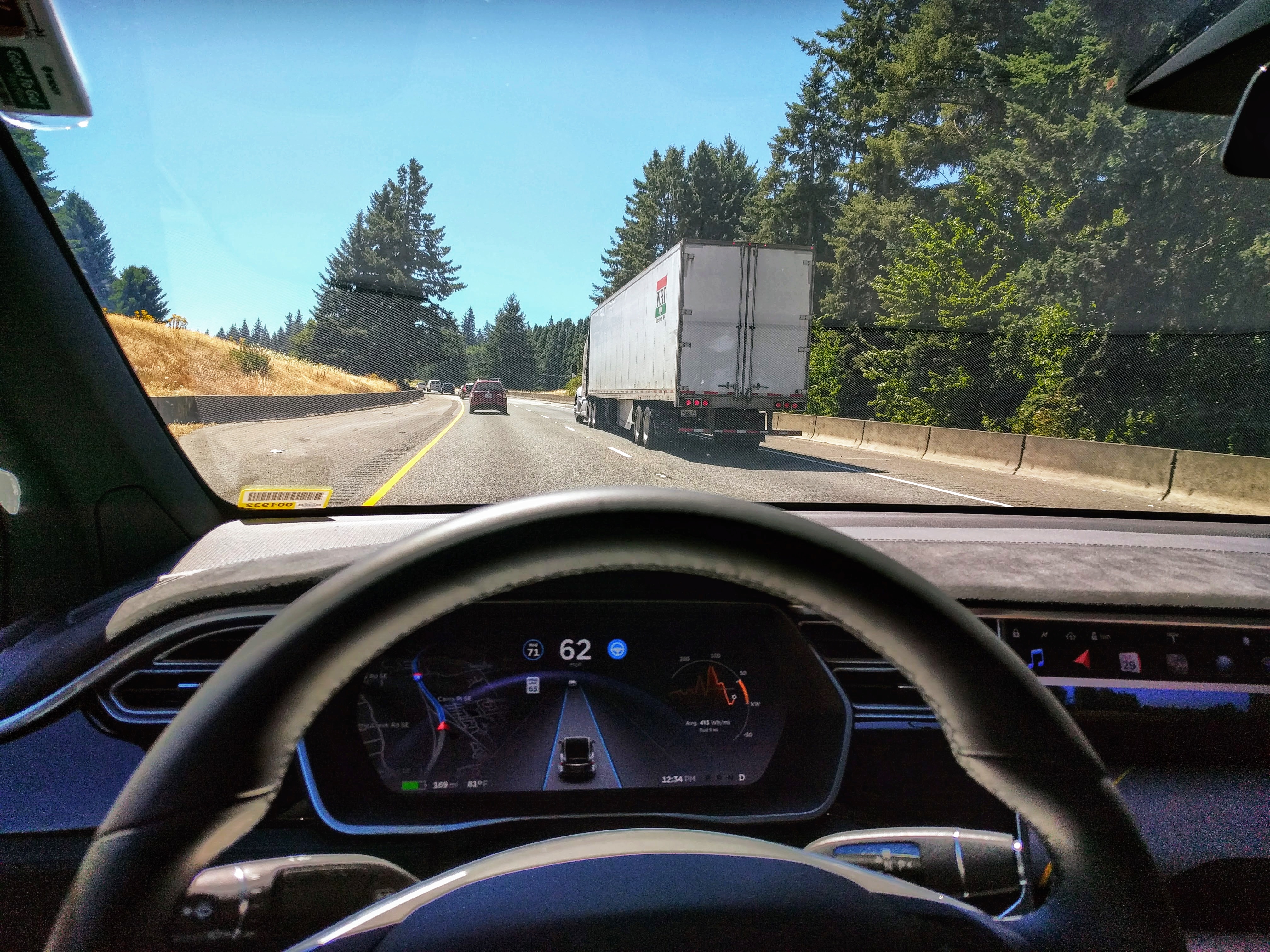
Source: Wikipedia - Tesla Autopilot
 Check out our Ryzen 9000 vs Intel Core Ultra 200: Which CPU is Best in 2026? for more info.
The Road to v13: A History of Promises and Progress
My friend Jaewon and I argued about Tesla's FSD for hours - he thought it was a game-changer, while I was skeptical. Tesla's Full Self-Driving (FSD) has been a concept that's evolved significantly since its initial introduction. What started as a more advanced Autopilot has gradually incorporated features like Navigate on Autopilot, Auto Lane Change, Autopark, and Summon. However, the core promise of "full self-driving" has remained elusive, often drawing criticism for being overhyped. Many early adopters, eager for a glimpse into the future, invested heavily in the FSD package, leading to a vocal community with high expectations and frequent debates about its value. Learn more about the evolution of Tesla Autopilot here.
The journey to FSD v13 has been fraught with technical hurdles and public skepticism. From phantom braking incidents to confusing navigation in complex urban environments, each iteration brought both improvements and new challenges. Regulatory bodies, especially in regions like California, have also kept a close watch, often requiring disclaimers and even opening investigations into marketing claims, adding another layer of complexity to Tesla's autonomous ambitions. The constant software updates, sometimes weekly, speak to the iterative and data-driven approach Tesla takes, leveraging its vast fleet of vehicles as a real-world testing ground, a strategy unmatched by any competitor. Check out our Claude 4 vs GPT-4o: Best AI for Coding in 2026? for more info.
— wait, let me back up — we've seen some solid updates, like the Supervised V12.6.4 release in June 2026, which still required significant driver oversight CleanTechnica. This ongoing development cycle, while slow to deliver on the ultimate promise, has been instrumental in refining the underlying neural networks and algorithms.
One thing I keep thinking about - will FSD v13 be the one that finally gets it right? Given this history, it's natural to wonder if FSD v13 represents a true paradigm shift or just another step in an ongoing evolution. Will this version finally be able to handle complex urban environments with the same competence as a human driver, or will it continue to rely on human supervision?
While Minjun (and many consumers) focus on the immediate experience and incremental updates, it's crucial to contextualize Tesla FSD v13 within the broader autonomous driving ecosystem. Tesla's vision-only approach, leveraging a massive fleet for data collection, stands in stark contrast to competitors like Waymo and Cruise, which heavily rely on LiDAR and high-definition mapping. The "not a Tesla App" statement for v13 could signal a deeper integration of neural network planning, moving further away from explicit rules and closer to a pure end-to-end learning model. This is a high-risk, high-reward strategy. If Tesla's FSD v13 truly achieves human-level driving capability through vision alone, it would be a monumental validation of their approach and potentially unlock a scalable, cost-effective solution for widespread adoption. However, the regulatory hurdles and the need for absolute reliability in safety-critical situations mean that even a technically brilliant FSD v13 will face significant challenges on its path to full autonomy without human supervision. The industry is watching, not just for technical prowe
Maximizing Your FSD Experience: Practical Tips for Drivers
With each FSD iteration, Tesla pushes the boundaries of driver assistance, but the critical element remains the human behind the wheel. To truly leverage FSD v13's capabilities while ensuring safety, a proactive and informed approach is essential. First and foremost, vigilance is non-negotiable. Despite its name, FSD is a Level 2 autonomous system, meaning it requires constant human supervision. Keep your hands on the steering wheel, even if the system doesn't explicitly prompt you, and maintain an unwavering focus on the road ahead. Do not use your phone or engage in activities that divert your attention. Learn to anticipate FSD's behavior. Through observation, you'll start to recognize scenarios where the system might hesitate, make an unusual decision, or require intervention – common examples include complex unprotected left turns, navigating congested urban intersections, or encountering unusual road markings or construction zones. Being prepared for these moments allows for smooth, timely interventions rather than abrupt, reactive ones. Practicing gentle steering inputs or a light tap on the brake or accelerator can help you take control gracefully without disorienting the system or other drivers. Remember, the goal is to seamlessly blend FSD's capabilities with your own driving intuition. Furthermore, understanding and utilizing FSD's settings can significantly enhance your experience. Tesla offers various driving profiles, such as "Chill," "Average," and "Assertive," which dictate how aggressively the system navigates traffic and makes lane changes. Experiment with these to find a setting that aligns with your comfort level and the specific driving conditions of your common routes. Starting with "Chill" in unfamiliar or complex environments is often a good strategy. Finally, become an active participant in FSD's development by providing effective feedback. If you encounter a bug or a perplexing decision by the system, use the voice command "Bug Report" immediately and provide a detailed description of the incident, including the location and specific circumstances. This data is invaluable to Tesla's engineers and contributes directly to future improvements. Regularly updating your car's software is also critical, as each new version brings refinements, bug fixes, and performance enhancements that are crucial for a continually improving FSD experience. Remember, FSD is a powerful tool, but it's ultimately your responsibility to operate your vehicle safely within its current limitations.Is FSD v13 Right for You? A Buyer's Guide to Autonomous Ambition
The allure of Tesla's Full Self-Driving is undeniable, but with its premium price tag and an ongoing "beta" status, deciding whether to invest in FSD v13 requires careful consideration. Before making a financial commitment, assess your personal driving habits and needs. Does your daily commute involve extensive highway driving, where the standard Autopilot's adaptive cruise control and lane-keeping features already provide significant relief? Or do you frequently navigate complex urban environments, stoplights, unprotected turns, and busy intersections, where FSD's full capabilities are truly tested? For many drivers, the core Autopilot features suffice, making the substantial FSD investment potentially unnecessary. Next, consider your tolerance for a system that is still actively learning and evolving. FSD, even in its v13 iteration, is not a flawless robot chauffeur. You should expect interventions, occasional moments of hesitation or confusion, and even some uncomfortable decisions. If you demand a perfectly polished, hands-off driving experience, FSD might currently fall short of your expectations, leading to frustration. Are you comfortable being a beta tester, understanding that your car's performance with FSD contributes to its development? Your patience level with evolving technology is a critical factor here. Evaluate the cost-benefit analysis carefully. The outright purchase of FSD is a significant upfront expenditure, and its long-term resale value impact can be debated. Alternatively, Tesla offers a subscription model, which provides a flexible way to experience FSD without the full commitment. This is an excellent option for those who want to try FSD for specific road trips, during periods of higher demand for its features, or simply to evaluate its current performance before making a permanent decision. The subscription model allows you to sample the technology and see if it genuinely enhances your driving experience in a way that justifies its recurring cost. Finally, consider the regulatory landscape and local driving conditions. FSD's performance can vary significantly depending on road quality, signage clarity, and even local driving culture. Check recent user reviews and experiences specific to your region. Remember that FSD is still Level 2 autonomy and local regulations regarding its use might vary. While the dream of true full self-driving is compelling, making an informed decision about FSD v13 means balancing the excitement of technological progress with pragmatic considerations about its current capabilities, cost, and your personal driving reality.Frequently Asked Questions
Q: What is Tesla FSD v13?
Tesla FSD v13 is the latest iteration of Tesla's Full Self-Driving software, aiming to bring more advanced autonomous driving capabilities to Tesla vehicles. It continues to build upon previous versions, incorporating new features and improvements based on real-world data.
Q: Is Tesla FSD v13 truly "full self-driving"?
While Tesla markets it as Full Self-Driving, current versions, including v13, still require active driver supervision. It is considered an advanced driver-assistance system that can handle many driving tasks but cannot operate entirely without human intervention in all situations.
Q: How does Tesla FSD v13 differ from previous versions?
Tesla FSD v13 is expected to incorporate advancements in its neural network and AI algorithms, potentially leading to improved performance in complex driving scenarios, better navigation, and a more seamless driving experience. Specific details are usually revealed closer to release.
Q: What are the main challenges for Tesla FSD v13?
Key challenges include navigating complex urban environments, ensuring absolute safety and reliability in all weather and traffic conditions, and meeting regulatory requirements across different jurisdictions. Public perception and trust are also significant factors.
Q: When will Tesla FSD v13 be released?
Tesla typically announces release dates for major software updates closer to their availability. While v13 is anticipated, an exact release date has not been confirmed. Drivers are encouraged to stay updated through official Tesla channels.


댓글
댓글 쓰기