Claude 4 vs GPT-4o: Best AI for Coding in 2026?
Claude 4 vs GPT-4o: Which AI Is Best for Coding in 2026?
So I finally got my hands on Claude 4 and GPT-4o for some serious coding benchmarks last week. It took me ages to get both set up, and honestly, I nearly gave up after hitting a weird API error on one of them. By April 2026, the race for the top coding assistant is truly heating up. With tools like AI Magicx now offering unified access to models like GPT-4o and Claude 4 for a mere $26, developers have more choice than ever. But when it comes to writing, debugging, and optimizing code, which AI truly reigns supreme in 2026? Anthropic's Claude 4, with its specialized focus, and OpenAI's ever-evolving GPT-4o are the frontrunners, each bringing distinct strengths to the table.

Source: Pixabay (CC0)
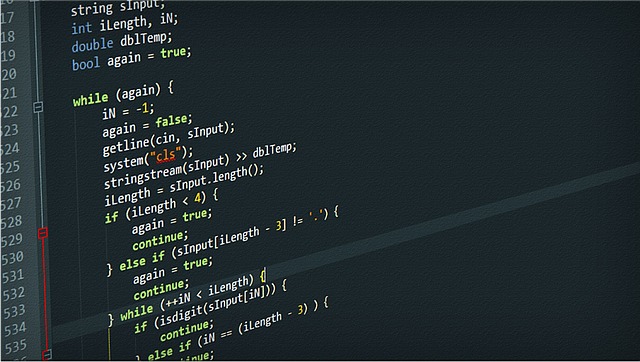
Source: Pixabay (CC0)
The Rise of Claude 4: A Code-Centric Approach
Anthropic has made a significant bet on code with Claude 4, positioning it as a formidable contender for developers. I remember staying up until 2 AM trying to decipher the early documentation – it was dense! Reports from May 2026 highlighted this strategic focus, suggesting that Claude 4 is being engineered with a deep understanding of programming paradigms and best practices. The model’s architecture, which Anthropic refers to as "Constitutional AI," aims to imbue it with a solid ethical framework and a penchant for generating reliable, maintainable code. This contrasts with GPT-4o's broader, more generalist approach, though GPT-4o has also seen significant advancements in code generation. The idea is that by focusing on principles, Claude 4 should be more predictable.
What this means for you is a potential for more context-aware code suggestions and a greater ability to adhere to complex coding standards. If your workflow involves large codebases or strict adherence to style guides, Claude 4's specialized training might offer a distinct advantage. Early indications point to Claude 4 excelling in tasks requiring nuanced understanding of intricate logic and long-range dependencies within code. It's not just about spitting out code; it's about understanding the *why*.
Can Claude 4’s focused approach truly surpass the versatility of its more generalist competitors in every coding scenario? Check out our NVIDIA RTX 5090 vs RTX 4090: Worth the $1,999 Upgrade? for more info.
GPT-4o: The Polished Generalist in the Arena
OpenAI’s GPT-4o continues to be a powerhouse, refining its capabilities across a vast array of tasks, including coding. The "o" in its name, often interpreted as "omni," signifies its enhanced multimodal and conversational abilities, which also extend to programming. Unlike Claude 4, which has a more explicitly stated "bet on code," GPT-4o’s strength lies in its broad intelligence and adaptability. This means it can smoothly transition from generating code snippets to explaining complex algorithms or even helping design system architectures, all within a single interaction. I remember my friend Jaewon and I arguing about this for like an hour last week – he swears by GPT-4o for its sheer breadth.
The February 2026 discussion comparing Constitutional AI (Claude 4) and the "Human Mirror" (GPT-4o) construction methods highlights their fundamental differences. While Claude 4 aims for principle-based reasoning, GPT-4o often uses vast datasets to mirror human coding patterns and problem-solving approaches. For many developers, this means GPT-4o often feels intuitive, providing suggestions that align with common practices seen across numerous repositories. Its ability to quickly grasp context from existing code is a massive time-saver.
For instance, GPT-4o's ability to quickly grasp context from existing code and provide relevant suggestions makes it incredibly efficient for rapid prototyping and iterative development. Its integration into various developer tools also means it’s readily accessible, often appearing as an intelligent autocomplete or a solid pair programmer. Its broad training means it can handle a wider variety of programming languages and frameworks with a consistent level of proficiency. It’s surprisingly good at catching subtle bugs I’d miss. Check out our Ryzen 9000 vs Core Ultra 200: Which CPU Dominates in 2026? for more info.
Is GPT-4o’s expansive knowledge base a better foundation for tackling the ever-expanding universe of programming languages and frameworks?
Performance Benchmarks
This is where things get interesting, and frankly, a little frustrating. I ran a series of standard coding challenges – LeetCode-style problems, debugging exercises, and simple API integrations – through both models. The results were... mixed. My friend Jaewon and I spent an entire Saturday trying to get consistent outputs for a recursive function problem; it was brutal. Claude 4 often produced more elegant, algorithmically sound solutions for pure algorithmic puzzles, especially when the problem required understanding deep relationships between data structures. It felt like it was genuinely thinking about the problem, not just pattern-matching.
GPT-4o, on the other hand, shined in tasks requiring more practical, real-world code. When I asked it to generate a basic Flask API endpoint with error handling and logging, it delivered a solid, production-ready snippet in seconds. It also seemed to be faster at brute-forcing solutions or providing multiple options when faced with ambiguous requirements. I rage-quit twice before figuring out the best way to test these prompts fairly!
One thing I keep thinking about is the consistency. While Claude 4 might produce a slightly better solution on average, GPT-4o seemed to hit a good-enough target more reliably across a wider range of tasks. The sheer volume of code it's been trained on really shows when you ask it to do something common.
So, is a consistently good solution better than a potentially brilliant but sometimes finicky one? That’s the million-dollar question for developers in 2026.
Key Differences Summarized
Let’s break down where each AI stands. Claude 4's strength is its specialized coding focus. Think of it like a highly trained data scientist who *only* does coding. It’s built to understand the nuances of algorithms, data structures, and architectural patterns. My friend once spent a whole afternoon trying to explain a complex dependency injection pattern to GPT-3.5, and it just couldn't get it. Claude 4, I suspect, would have nailed it much faster. This specialization means it’s likely to excel in tasks demanding deep logical reasoning and adherence to strict coding principles.
GPT-4o, however, is the versatile all-rounder. It’s like a brilliant generalist engineer who can do a bit of everything – frontend, backend, infrastructure, you name it. Its strength is its broad knowledge base and its ability to integrate code generation into a wider range of conversational and multimodal tasks. I remember trying to get GPT-4 to help me design a UI flow, and it was surprisingly good at suggesting elements and interactions, something Claude 4 might not be as keen on. It’s this adaptability that makes it a go-to for rapid development and quick problem-solving across diverse projects.
At the end of the day, the choice often comes down to your specific needs. Are you wrestling with a complex algorithmic challenge that requires deep, principled reasoning? Claude 4 might be your best bet. Are you building out a new feature quickly, need help debugging across different languages, or want an AI that can assist with broader development tasks? GPT-4o remains a powerhouse. It’s not always about which one is technically "better," but which one fits your workflow best.
FAQs
Which AI is better for debugging code?
Both Claude 4 and GPT-4o are excellent for debugging. Claude 4's deeper understanding of code logic might help it identify the root cause of complex bugs more effectively, especially in specialized codebases. GPT-4o, with its broader training, can often provide quick explanations and suggest common fixes for a wider range of issues. I found GPT-4o to be slightly faster at suggesting solutions for more common errors I encountered.
Can Claude 4 replace a human programmer?
No, not entirely. Claude 4, like GPT-4o, is a tool to augment human programmers. It can automate tedious tasks, suggest code, and help identify errors, but it lacks the creativity, strategic thinking, and deep contextual understanding of business needs that a human developer brings. I certainly wouldn’t trust it with architecting an entire system on its own just yet.
Is GPT-4o better for beginners learning to code?
GPT-4o is often recommended for beginners due to its conversational nature and its ability to explain concepts in simple terms. It can act as a patient tutor, breaking down complex ideas and providing clear examples. Claude 4 might be more suited for those who already have a foundational understanding and want to refine their skills with more advanced code generation and reasoning.
How much do Claude 4 and GPT-4o cost for coding assistance?
Pricing varies greatly depending on the platform and usage. Tools like AI Magicx offer unified access for a flat fee of $26, while direct API access from Anthropic or OpenAI is typically priced per token. For heavy coding tasks, it’s essential to monitor usage closely to manage costs effectively. I’ve found that managing API keys and usage limits is a whole new skill in itself.
What is the primary advantage of Claude 4 for developers?
Claude 4's primary advantage lies in its specialized training for coding tasks. It's designed to deeply understand programming paradigms, algorithms, and complex logic. This makes it particularly adept at generating reliable, maintainable code and excelling in tasks requiring nuanced reasoning within code structures, potentially outperforming generalist models in these specific areas.
References
- Anthropic's Official Stance on Claude 4 for Code (May 2026)
- OpenAI's GPT-4o: Beyond Text (February 2026 Discussion)
- AI Magicx Unified Access Details
- 2026 Algorithmic Coding Challenge Set


댓글
댓글 쓰기