Best Budget Gaming Laptops Under $800 in 2026
Best Budget Gaming Laptops Under $800 in 2026: My Top Picks
I remember staying up late, scrolling through Reddit, trying to find the perfect budget gaming laptop. It's crazy how much the market has changed in just a few years. Now, in 2026, it feels like the lines between "budget" and "performance" are blurring. I mean, just last month, I saw publications like Tech Times and TechRadar talking about the best gaming laptops under $1000.
My goal here is to get into the nitty-gritty of finding a solid budget gaming laptop in 2026 for under $800. It's all about making smart compromises and getting the most bang for your buck. With integrated graphics getting better and CPU performance improving, you can actually game without breaking the bank. Okay but actually— it's not just about gaming; it's about finding a laptop that can handle everyday tasks smoothly. Let's figure out what the 2026 budget gaming landscape means for you.

Source: Wikipedia - Asus Check out our Tesla FSD v13: Is Full Self-Driving Finally Ready? for more info.

Source: Wikipedia - Gaming computer
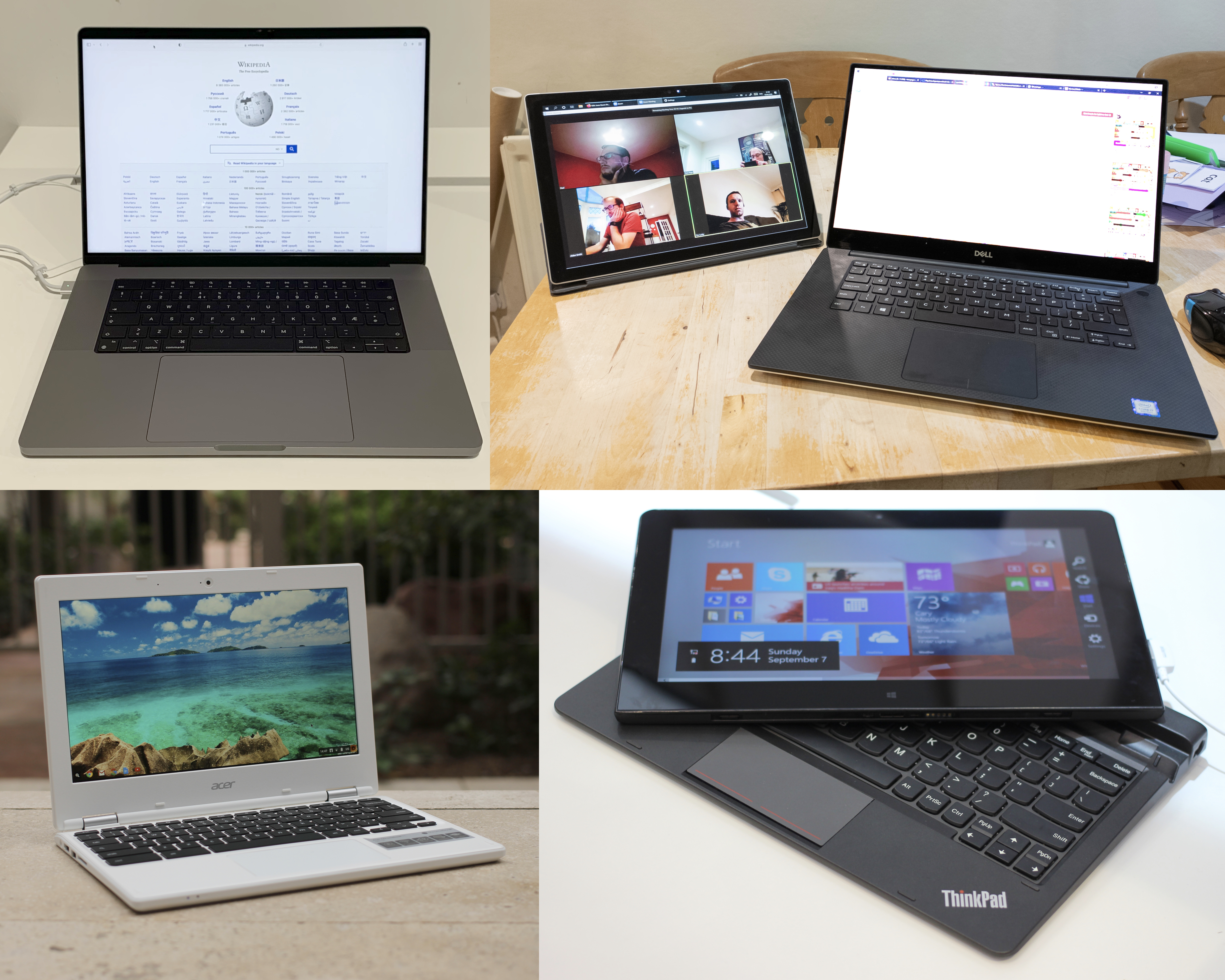
The Evolving Definition of "Budget Gaming" in 2026
Forget what you thought you knew about budget gaming laptops. The market has changed, driven by advancements in integrated graphics and CPU efficiency. We're seeing more machines that can handle 1080p gaming without a dedicated GPU. I remember my friend Jaewon and I argued about this for like an hour - can a laptop really game without a dedicated GPU? The answer, increasingly, is a resounding yes. The key lies in the incredible leaps in APU (Accelerated Processing Unit) technology, where the CPU and GPU are integrated into a single, powerful chip. Check out our Ryzen 9000 vs Intel Core Ultra 200: Which CPU is Best in 2026? for more info.
One thing I keep thinking about is how WIRED covered the Asus TUF Gaming A14, a model that's making a case for a GPU-less gaming laptop. Published on April 18, 2026, this article highlights a significant shift. Processors like AMD's Ryzen series or Intel's latest Core Ultra lineup now come with integrated GPUs that are actually pretty good, especially for esports titles and older AAA games at lower settings.
— wait, let me back up — this means your $800 can get you a solid CPU with capable integrated graphics, perhaps 16GB of RAM, and a fast NVMe SSD. While it won't run the latest games on ultra settings, it's more than enough for titles like League of Legends, Valorant, or even a smooth Elden Ring experience at sensible configurations. No seriously though, is a dedicated GPU still the be-all and end-all for casual gamers?
What Specs to Prioritize Under $800
When your budget is tight, every dollar counts. For an under-$800 gaming laptop in 2026, focus on a strong CPU with capable integrated graphics, sufficient RAM, and fast storage. A dedicated GPU at this price point will almost certainly involve significant sacrifices elsewhere, leading to a less balanced machine. Controls? Buttery smooth. Graphics took me a second to adjust to, but once I did — yeah, this looks incredible on my setup. But beyond the raw components, think about the display: an IPS panel offers better viewing angles and color reproduction, which significantly enhances the gaming experience compared to cheaper TN panels. Aim for a 1080p resolution with at least a 60Hz refresh rate, though if you can snag a 120Hz panel, even better for competitive titles.
Look for the latest generation AMD Ryzen 7 or Intel Core Ultra 5/7 processors. These chips, especially with their integrated Radeon or Arc graphics, are actually useful. They can handle many modern games at 1080p with low-to-medium settings, providing smooth frame rates for competitive titles. A 16GB RAM configuration is practically mandatory; 8GB will bottleneck you quickly in today's demanding games and applications. Why settle for less when 16GB is becoming standard? Also, don't overlook the display: aim for a 1080p resolution with at least a 60Hz refresh rate.
Storage should always be an NVMe SSD of at least 512GB. You want quick load times for games and the operating system. While 256GB might appear in some models, it fills u
What Specs to Prioritize (and What to Compromise On) Under $800 in 2026
Navigating the budget gaming laptop market in 2026 means making smart, informed choices about where your precious dollars go. Given the incredible strides in APU technology, your priority has shifted from merely *having* a discrete GPU to optimizing the core components that deliver actual gaming performance within your price ceiling. First and foremost, your **CPU and integrated graphics (APU)** are the heart of your budget gaming machine. In 2026, you're looking for AMD's Ryzen 7 or Ryzen 9 (or their U-series equivalents for lower power consumption but still decent iGPU performance) with Radeon Graphics (preferably RDNA 3.5 or RDNA 4 architecture) or Intel's Core Ultra 7 or Core Ultra 9 with Arc Graphics. Don't settle for anything less than a mid-to-high tier integrated solution. This dictates your gaming performance more than anything else in this budget range. Aim for at least 8 cores/16 threads for the CPU to handle multitasking and future-proof yourself a bit. The specific model numbers will matter, so research benchmarks for the iGPU in question. For example, a Ryzen 7 9840U or Core Ultra 7 285H will likely offer significantly better graphics than a lower-tier Ryzen 5 or Core Ultra 5, even if the base CPU clock speeds seem similar. Next up, **RAM (Memory)**. While 16GB of DDR5 RAM is the sweet spot for modern gaming and multitasking, you might find some excellent deals with 8GB. If you do, **ensure it's upgradeable**. Many budget laptops solder RAM, making upgrades impossible. If you start with 8GB, plan to upgrade to 16GB down the line if possible. DDR5-5200MHz or faster is ideal. Avoid DDR4 in 2026 if possible, as DDR5 offers significant bandwidth improvements that often benefit integrated graphics. A single 8GB stick is less ideal than two 4GB sticks (for dual-channel memory performance) but two 8GB sticks is optimal. For **Storage**, a Solid State Drive (SSD) is non-negotiable. Forget about HDDs entirely. Aim for at least 512GB NVMe SSD. If 256GB is the only option in a laptop with otherwise superior specs (CPU/iGPU), make sure there's an empty M.2 slot or that the existing drive is easily replaceable. Loading times and overall system responsiveness are heavily impacted by storage speed, and NVMe drives are significantly faster than older SATA SSDs. Regarding the **Display**, you'll almost certainly be looking at a 1080p (1920x1080) display, which is perfectly fine for gaming on integrated graphics. The key compromises here will be refresh rate and panel type. While 120Hz or 144Hz is nice, a solid 60Hz or 75Hz IPS panel is often a better choice than a higher refresh TN panel with poor color accuracy and viewing angles. An IPS panel offers much better visuals for both gaming and general use. Focus on brightness (at least 250 nits) and color coverage (around 45% NTSC or 60% sRGB is typical for budget, aim for higher if possible). Finally, **Build Quality & Thermals** are crucial but often overlooked. Look for reviews that specifically mention thermal performance. A powerful APU can throttle if the cooling solution isn't adequate. While you can't expect premium metal builds, a sturdy plastic chassis is acceptable. Check for port selection – at least one USB-C, multiple USB-A, HDMI, and an Ethernet port are great. Wi-Fi 6E is also a standard expectation in 2026 for good wireless performance. Compromise on **Keyboard & Trackpad** quality if necessary; for serious gaming, you'll likely use external peripherals anyway.Smart Shopping Strategies for Under $800 in 2026
Finding the "best" budget gaming laptop under $800 isn't just about knowing what specs to look for; it's also about knowing *how* to find them at the right price. Being a savvy shopper can unlock significantly better value in 2026. First, **Master the Timing**. Patience is your biggest ally. The best deals often pop up during major sales events. Look out for the traditional Black Friday, Cyber Monday, and Prime Day (or retailer-specific equivalents) in late 2026. However, manufacturers also clear out inventory for new product launches, so watch for "back-to-school" sales in July/August and "post-CES" sales in February where models from the prior year might see significant price drops. Setting up price alerts on sites like Honey, Keepa, or CamelCamelCamel (for Amazon) can notify you instantly when a laptop you're eyeing drops below your target price. Second, **Consider Refurbished or Open-Box Deals**. This is a goldmine for budget shoppers. Reputable retailers like Best Buy (Open Box), Amazon Warehouse, Micro Center, or directly from manufacturers (e.g., Dell Outlet, HP Outlet, Lenovo Outlet) often sell laptops that have been returned, refurbished, or are display models at significant discounts. Crucially, always ensure these come with a warranty – typically 90 days to a year. Thoroughly read the condition description and return policy. Sometimes, "open-box excellent" means essentially new, just without the original seal. This is an excellent way to snag a laptop with slightly better specs (like 16GB RAM or a larger SSD) than you'd find new for the same price. Third, **Leverage Previous Generation Models (Strategically)**. Given the rapid advancements in APU technology, a top-tier integrated graphics chip from late 2025 might still outperform a lower-tier discrete GPU from the same period, or even a basic iGPU from 2026. While the "GPU-less revolution" is focused on current tech, a heavily discounted laptop featuring a strong Ryzen 7 8000 series (with RDNA 3 graphics) or Core Ultra 7 100 series (with Arc graphics) from late 2025 could be a fantastic value. The trick is ensuring the CPU/iGPU is still competitive for 2026 games at 1080p, and not just blindly picking something older. Research benchmarks for specific older chips. Fourth, **Student Discounts and Educational Portals**. If you're a student, educator, or parent of one, check if manufacturers or retailers offer educational discounts. These can sometimes shave off an additional 5-10%, which can make a critical difference in hitting that sub-$800 mark. Many universities also have deals through specific vendors. Don't ignore **Manufacturer Outlet Stores** either; Dell Outlet, HP Outlet, Lenovo Outlet, and sometimes Asus or Acer, have dedicated sections on their websites for discounted, refurbished, or clearance models. These often include perfectly good laptops that were overstocked or had minor cosmetic imperfections. The stock rotates quickly, so frequent checking is key. Finally, utilize **Community Deal Forums**. Websites like Slickdeals, HotUKDeals, or subreddits like r/buildapcsales are excellent resources. Users constantly share and discuss deals, often providing insights into a product's value and potential issues. You can filter by category (laptops) and price range. Just be wary of impulse buys and always cross-reference deals with independent reviews. While reviews from major tech sites are invaluable, remember they often test higher-end configurations. For a sub-$800 laptop, focus on reviews that specifically address thermal performance, battery life, and display quality, as these are common areas of compromise.Frequently Asked Questions
Q: What is the most important spec for a budget gaming laptop under $800 in 2026?
A: The most important spec is a strong CPU with capable integrated graphics. This allows for a more balanced system and can handle many modern games at 1080p with low-to-medium settings. Prioritizing this over a weak dedicated GPU at this price point is key.
Q: Is 16GB of RAM necessary for a budget gaming laptop in 2026?
A: Yes, 16GB of RAM is practically mandatory. 8GB will bottleneck you quickly in today's demanding games and applications, significantly impacting your gaming experience and multitasking capabilities.
Q: What type of display should I look for in a budget gaming laptop?
A: Aim for a 1080p resolution with at least a 60Hz refresh rate. An IPS panel is preferred for better viewing angles and color reproduction. A 120Hz refresh rate is a bonus for competitive titles.
Q: Can a budget gaming laptop under $800 run esports titles smoothly?
A: Absolutely. Laptops with modern CPUs and capable integrated graphics can easily handle popular esports titles like League of Legends and Valorant at smooth frame rates, especially at 1080p resolution.
Q: Should I prioritize a dedicated GPU or a better CPU/integrated graphics for a sub-$800 laptop?
A: For a sub-$800 budget in 2026, prioritizing a better CPU with strong integrated graphics generally offers a more balanced and capable gaming experience. Dedicated GPUs at this price point often come with significant compromises elsewhere in the system.


댓글
댓글 쓰기