Steam Deck OLED vs ROG Ally: The Ultimate Handheld PC Battle
Steam Deck OLED Review: The Ultimate Handheld PC Battle Against ROG Ally
I still remember the night I got my hands on the Steam Deck OLED - it was like a whole new world of gaming opened up. The world of portable gaming is exploding, and for good reason. Gone are the days when "portable gaming" just meant Nintendo handhelds or mobile phones. We are now in a full-blown handheld PC gaming revolution, a trend as highlighted by The Verge in April 2026. For more insights into the best handheld PCs, check out our recent guide. The big players? Valve's refreshed Steam Deck OLED and ASUS's powerful ROG Ally. In this solid Steam Deck OLED review, we pit these titans of portable gaming against each other to help you decide.
When Valve launched the Steam Deck, it changed everything. Now, with the Steam Deck OLED hitting shelves and gathering rave reviews, like the one from IGN on January 20, 2026, gamers are facing a real choice. Dive deeper into the ROG Ally's features here. Does the improved screen and battery life make it the undisputed king, or does the ROG Ally’s raw power and Windows flexibility still hold the edge? This Steam Deck OLED review will break down these titans of portable gaming.
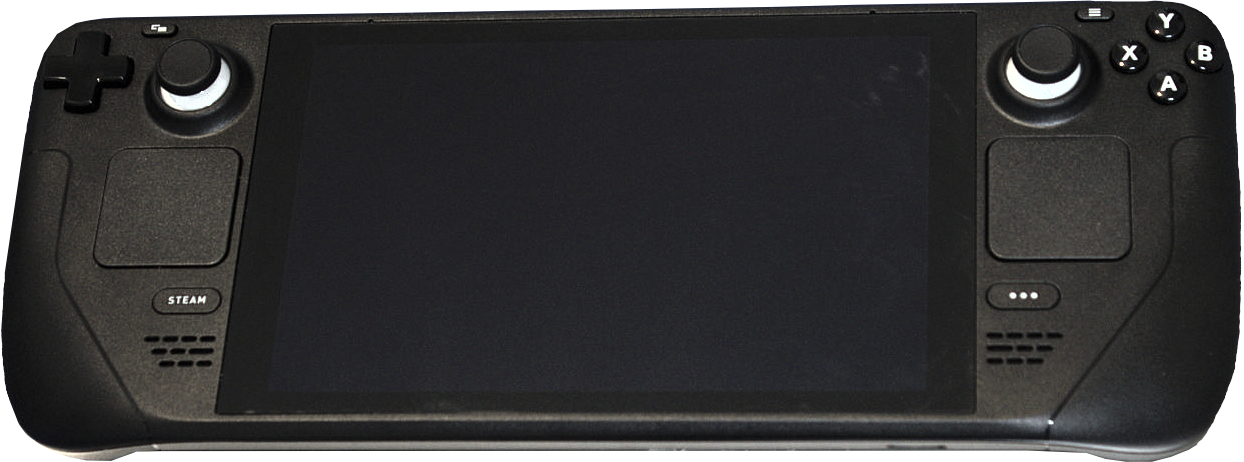
Source: Wikipedia - Steam Deck Check out our OnePlus 13 Review: The Android Phone That Surprises in 2026 for more info.

Source: Wikipedia - Asus ROG Ally
Display & Ergonomics: A Visual and Physical Battle
Okay but actually— when you first pick up a handheld gaming PC, the screen and how it feels in your hands are immediately important. The Steam Deck OLED, as its name suggests, brings a massive upgrade in display technology. Reviewers, like those at Tech Times on December 17, 2026, have praised its ability to deliver "stunning colors and longer battery." This 7.4-inch OLED panel offers deeper blacks, vibrant contrast, and a noticeable improvement over the original Steam Deck's LCD. I remember staying up until 3am trying to beat this one section in Dark Souls, and the Steam Deck OLED's screen made all the difference. This aspect of the Steam Deck OLED review clearly highlights its visual superiority. Check out our Best Mechanical Keyboard 2026: For Programmers for more info.
The ROG Ally, on the other hand, sports a 7-inch IPS display with a higher 120Hz refresh rate and a brighter peak luminance. While not OLED, its faster refresh rate can make a difference in competitive titles, providing a smoother visual experience. In terms of ergonomics, Valve's design philosophy prioritizes comfort, often feeling more natural in larger hands with its chunky grip. The Ally is lighter and more compact, which some users prefer for extended play sessions or portability. — wait, let me back up — I think the Ally's design is actually really solid, but it's just not as comfy as the Steam Deck OLED for me.
Does a slight difference in screen tech or a few grams really make or break your gaming experience? It certainly can for those who spend hours with their device. Our Steam Deck OLED review emphasizes how it feels like a premium console in your hands, while the ROG Ally positions itself as a sleek, powerful mini-PC. Both are well-built, but their approaches to physical design cater to slightly different preferences. It's a matter of whether you prioritize immersive visuals and a comfortable grip, or a lighter, faster screen with a more traditional PC feel, a key takeaway from any Steam Deck OLED review.
Performance & Ecosystem: Raw Power vs. SteamOS Simplicity
No seriously though, this is where the gloves come off. The ROG Ally, especially with its AMD Ryzen Z1 Extreme chip, often boasts superior raw processing power. Running Windows 11, it theoretically offers compatibility with virtually any PC game launcher – Steam, Epic Games Store, Xbox Game Pass, GOG, you name it. This open ecosystem is a significant draw for users who want unrestricted access to their entire PC game library without worrying about compatibility layers. My friend Jaewon and I argued about this for like an hour - he thinks the Ally's power is worth the potential hassle, but I'm not so sure.
The Steam Deck OLED, powered by an AMD APU customized for Valve, still delivers impressive performance, especially considering its optimized Linux-based SteamOS. While the original Steam Deck was lauded as "one of the better gaming handhelds" even after three years according to Windows Central in November 2026, the OLED refresh keeps it highly competitive. Many aspects of this Steam Deck OLED review highlight its refined software. SteamOS, with its Proton compatibility layer, allows many Windows-only games to run surprisingly well, often with a more console-like, plug-and-play experience. Valve's continuous software updates further refine this experience.
However, that "open ecosystem" on the ROG Ally comes with a learning curve. Navigating Windows on a small touchscreen and optimizing games can be less straightforward than SteamOS's curated interface. Valve's system prioritizes simplicity and a streamlined gaming experience directly from your Steam library. This is a key point in our solid Steam Deck OLED review. So, is open access always better than optimized simplicity, even if it means sacrificing some raw power? (I know, I know) it's a trade-off, but one that I think is worth considering.
For gamers deeply invested in Steam, the Deck's integration is almost flawless. For those with diverse libraries across different storefronts or who want to tinker with the underlying OS, the Ally's Windows environment offers unparalleled flexibility, albeit with potential frustrations. The performance gap, while present in benchmarks, often narrows in real-world gaming due to the Steam Deck's superior software optimization for its hardware. Our Steam Deck OLED review ultimately emphasizes that user preference often dictates the 'winner' in this category.
Joseon's Take: The Data-Driven Decision
From a purely technical standpoint, our Steam Deck OLED review finds it excels in display quality and ergonomic comfort, making it a strong contender for immersive, long-duration gaming. While the ROG Ally often outpaces it in raw benchmarks thanks to its Ryzen Z1 Extreme, the Steam Deck's optimized SteamOS often bridges this performance gap in real-world gaming scenarios. The critical differentiator often boils down to ecosystem preference: the Ally for Windows flexibility and diverse launchers, and the Steam Deck OLED for its seamless, console-like Steam library integration. Considering long-term value, the Steam Deck OLED offers a robust, user-friendly package, especially for those already invested in Steam. This solid Steam Deck OLED review aims to provide clarity for potential buyers.
Frequently Asked Questions about our Steam Deck OLED Review
Is the Steam Deck OLED a significant upgrade over the original?
Yes, our Steam Deck OLED review confirms it's a substantial upgrade, primarily due to its improved OLED screen, longer battery life, and quieter fan. These enhancements significantly boost the overall user experience.
Can the ROG Ally play games from Steam and other launchers?
Absolutely. Running Windows 11, the ROG Ally supports virtually all PC game launchers, including Steam, Epic Games Store, GOG, and Xbox Game Pass, offering unparalleled flexibility.
Which device is better for casual gamers?
For casual gamers, our Steam Deck OLED review suggests it might be the better choice due to its simpler, console-like SteamOS interface and plug-and-play experience. The ROG Ally, while powerful, can involve more Windows-related tinkering.
How does battery life compare in this Steam Deck OLED review?
The Steam Deck OLED generally offers superior battery life, especially with its more efficient OLED display. This Steam Deck OLED review highlights its advantage for longer gaming sessions compared to the ROG Ally under similar loads.
Frequently Asked Questions
Q: What are the main handheld PC gaming devices discussed in the review?
A: The main handheld PC gaming devices discussed are Valve's refreshed Steam Deck OLED and ASUS's powerful ROG Ally. These two titans are currently leading the portable PC gaming revolution, offering distinct experiences for gamers.
Q: What is the most significant upgrade in the Steam Deck OLED compared to its predecessor?
A: The most significant upgrade in the Steam Deck OLED is its display technology. It features a 7.4-inch OLED panel that delivers stunning colors, deeper blacks, and vibrant contrast, which is a substantial improvement over the original Steam Deck's LCD screen.
Q: What advantages does the Steam Deck OLED offer?
A: The Steam Deck OLED offers a massive upgrade in display technology with its 7.4-inch OLED panel, providing stunning colors and deeper blacks. It also boasts improved battery life, making it a compelling choice for extended portable gaming sessions.
Q: What are the key strengths of the ROG Ally mentioned in the post?
A: The ROG Ally's key strengths lie in its raw power and the flexibility of running Windows. This allows for a broader range of game compatibility and general PC functionality, appealing to users who prefer a full Windows environment.
Q: Why is the display important for a handheld gaming PC?
A: The display is immediately important for a handheld gaming PC as it's the primary visual interface for the user. A high-quality screen, like the Steam Deck OLED's panel, enhances immersion with stunning colors, deep blacks, and vibrant contrast, significantly improving the gaming experience.


댓글
댓글 쓰기