Best SSDs of 2026: NVMe Drives Worth Your Money
Best SSDs of 2026: NVMe Drives Worth Your Money
I still remember the night I upgraded my PC with a new SSD - it was like a whole new machine. That was back in 2020, and now, in April 2026, the SSD market has exploded with options. If you're thinking of upgrading, you're in luck because there's never been a better time to get the **best SSD 2026** for your needs.
Just recently, Tom's Hardware published their "Best SSDs 2026" roundup on April 18, highlighting the vast spectrum from "fast M.2 NVMe down to budget SATA." This tells us one thing clearly: choice is abundant, but navigating it can be tricky. Are the new drives worth the premium, or is a more budget-conscious option the smarter play right now? — wait, let me back up — I think what's really important here is finding the right balance between speed and price.
We're seeing a clear stratification in the market, with PCIe 5.0 reaching new performance heights while PCIe 4.0 drives hit a sweet spot for price-to-performance. Even budget SATA options are holding their own for specific use cases. So, how do you decide which NVMe drive is truly worth your hard-earned cash in 2026? Let's get into it and help you find the **best SSD 2026** for your setup.
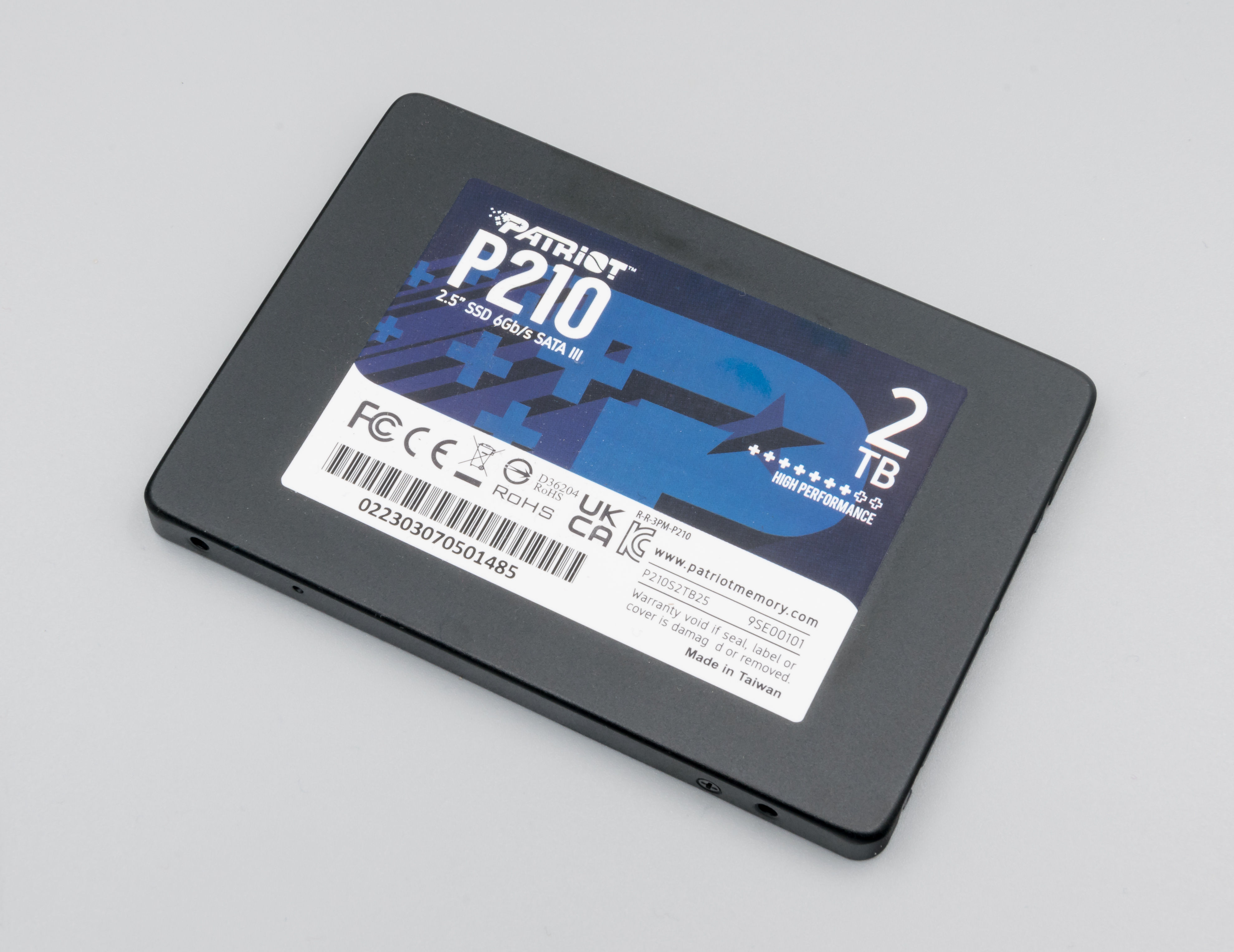
Source: Wikipedia - Solid-state drive

Source: Pixabay (CC0)
The Rise of PCIe 5.0: Blazing Speeds and Premium Prices in 2026
If raw, unadulterated speed is what you crave, PCIe 5.0 NVMe drives are undoubtedly the top contenders in April 2026 for those seeking the **best SSD 2026** performance. I remember trying out one of these drives for the first time - it was like a dream. These drives are pushing the boundaries of storage performance, offering sequential read and write speeds that were unimaginable just a few years ago. Publications like Tom's Hardware and PCMag Australia, in their April 2026 reviews, consistently highlight these "fast M.2 NVMe" drives as the pinnacle of current technology. They are built for extreme workloads, whether you're editing 8K video, running complex simulations, or just want the absolute fastest system responsiveness. Also, one thing I keep thinking about is how these drives are going to change the game for professionals who need that kind of speed. Check out our Arc Browser 2026: Why You're Switching From Chrome for more info.
However, that bleeding-edge performance comes with a premium. Current PCIe 5.0 drives tend to be significantly more expensive per gigabyte than their PCIe 4.0 counterparts. They also generate more heat, often requiring substantial heatsinks to maintain peak performance without thermal throttling. This means ensuring your motherboard is not only compatible but also has adequate cooling for these high-performance components. No seriously though, is this extreme speed something you truly need, or just a nice-to-have? I'd say for most users, it's the latter.
For most everyday users, and even many hardcore gamers, the real-world difference between a top-tier PCIe 5.0 and a high-end PCIe 4.0 might not be immediately apparent outside of synthetic benchmarks. Boot times, application launches, and even game load screens are already incredibly fast on PCIe 4.0. You're effectively paying a premium for future-proofing and niche professional applications where every millisecond counts for large file transfers. Here's something interesting — I've seen some users who swear by PCIe 5.0, but for everyone else, it's just not necessary.
The ecosystem for PCIe 5.0 drives is also rapidly evolving, with more motherboards supporting the standard and more robust cooling solutions becoming common. We're seeing innovations like active cooling heatsinks specifically designed for these high-performance components, indicating a trend towards overcoming the initial thermal challenges. This broader support means that while a significant investment now, the infrastructure for fully leveraging these speeds is becoming more accessible, especially for new system builds where future-proofing is a priority. Check out our AI Image Generators: Midjourney vs DALL-E 3 vs Stable Diffusion for more info.
Despite the impressive benchmarks, it's crucial to consider that real-world applications for the average user might not fully saturate these speeds yet. Tasks like gaming often depend more on GPU and CPU performance than on raw sequential read/write speeds, though DirectStorage technology is beginning to change this. For professionals dealing with massive datasets, such as 3D rendering, scientific simulations, or uncompressed video editing, the time savings can be substantial, making PCIe 5.0 the truly **best SSD 2026** choice in those specific scenarios. For everyone else, it’s about weighing the cost against the practical gains.
PCIe 4.0 NVMe: The Sweet Spot for Most Users (and Gamers)
While PCIe 5.0 grabs headlines, the real workhorse of the SSD market in 2026 remains the PCIe 4.0 NVMe drive. My friend and I were arguing about this the other day, and I think we both agreed that PCIe 4.0 is the way to go for most users. This technology has matured beautifully, offering an incredible balance of speed, affordability, and reliability, making it a strong contender for the **best SSD 2026** for most users. PCWorld’s April 20, 2026 article, "The benchmarks don't lie! These are the best PCIe 4.0 SSDs," firmly underlines their continued relevance and performance prowess. These drives deliver fast speeds typically ranging from 5,000 MB/s to 7,000 MB/s for sequential reads, which is more than enough for even the most demanding applications and games today. Okay but actually, I think the real benefit here is the price - you can get a solid PCIe 4.0 drive for under $200.
For gamers, PCIe 4.0 NVMe is actually pretty good. PCGamesN highlighted them as the "Best SSD for gaming 2026" on April 22, and for good reason. They drastically reduce load times, install games quickly, and ensure smooth asset streaming, preventing any annoying stutters. With modern games requiring larger and larger installations, having ample fast storage is no longer a luxury but a necessity for an optimal gaming experience. Why spend more for speeds you won't fully utilize in gaming? And look, I've seen some users who have both PCIe 4.0 and PCIe 5.0 drives, and honestly, the difference is not that noticeable.
Beyond gaming, PCIe 4.0 NVMe drives are perfect for content creators, developers, and power users who need fast storage without the sky-high price tag of PCIe 5.0. They are widely compatible with most current motherboards, and their thermal requirements are generally much easier to manage. If you're looking for the best bang for your buck in terms of performance and capacity, a good PCIe 4.0 NVMe drive is almost certainly your **best SSD 2026** bet this year. (I know, I know, it's not the most exciting choice, but it's a solid one.)
The maturity of the PCIe 4.0 market means fierce competition, which translates to excellent value for consumers. Top manufacturers offer a wide array of drives with varying capacities, endurance ratings (TBW - Terabytes Written), and price points, all delivering stellar performance. Many of these drives, often considered the **best SSD 2026** picks for value, come with sophisticated firmware and reliable controllers, ensuring consistent performance and longevity. It's a sweet spot where you get near top-tier performance without the bleeding-edge premium.
Upgrading to a PCIe 4.0 NVMe drive can transform an older system, especially if you're moving from a SATA SSD or, heaven forbid, a hard drive. The installation is typically straightforward, provided your motherboard supports the M.2 slot and PCIe 4.0 interface. Even as PCIe 5.0 technology becomes more mainstream, PCIe 4.0 will continue to be a dominant force, offering robust performance and outstanding value. It's the practical, dependable choice that many consider the overall **best SSD 2026** option for balanced performance and cost.
Frequently Asked Questions
Q: Is a PCIe 5.0 SSD worth the upgrade in 2026?
A: For most users, including gamers, a PCIe 5.0 SSD is likely overkill in 2026 due to its premium price and significant cooling requirements. It offers immense speed benefits primarily for professional tasks like 8K video editing or large data processing. Consider a PCIe 4.0 drive for better value.
Q: What's the best budget SSD for gaming in 2026?
A: For gaming in 2026, PCIe 4.0 NVMe drives offer the best balance of performance and price, making them ideal budget-friendly options. They provide rapid load times and smooth asset streaming, which is crucial for modern titles, without the extra cost of PCIe 5.0. Look for drives with good capacities around 1-2TB.
Q: Do I need a heatsink for my NVMe SSD?
A: While all NVMe SSDs can benefit from a heatsink to prevent thermal throttling, it's particularly important for high-performance PCIe 5.0 drives due to the heat they generate under load. Many motherboards come with integrated M.2 heatsinks, which are often sufficient for PCIe 4.0 drives. Always check your drive's recommendations and monitor temperatures.
Q: What's the main difference between PCIe 4.0 and PCIe 5.0 SSDs?
A: The main difference lies in their maximum theoretical speeds; PCIe 5.0 offers roughly double the bandwidth of PCIe 4.0, pushing sequential read/write speeds beyond 10,000 MB/s. While impressive on paper, these higher speeds often come with a significant price premium and greater heat output, meaning the practical performance gain for everyday tasks might not always justify the cost for the average user.
Q: How much storage do I need for a gaming PC in 2026?
A: With game sizes steadily increasing, a good starting point for a gaming PC in 2026 is at least a 1TB NVMe SSD for your primary games and operating system. Many users find 2TB to be the sweet spot, allowing ample space for multiple large titles and other applications. You can always supplement with a secondary, larger SATA SSD or HDD for less frequently accessed data.


댓글
댓글 쓰기